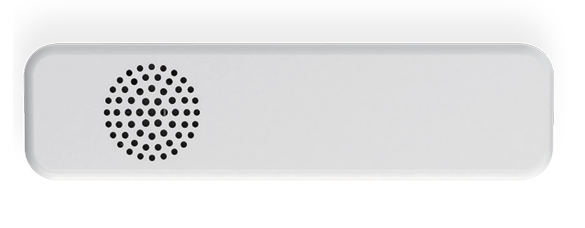
Aeotec aërQ Temperature and Humidity Sensor 8 was developed to record ambient values for humidity and temperature to warn of environment that is ideal for mould growth via Z-Wave communication. It is powered by Aeotec Gen8 technology. The technical specifications of aërQ Temperature and Humidity Sensor 8 can be viewed at this link.
Before purchasing make sure to contact your Z-Wave Gateway/Controller manufacturer to determine if this device is compatible, typically most Z-Wave gateways will be generically compatible to Switch and Sensor type devices. You can find a list of known compatible Gateway/Controllers in this link.
Familiarize yourself with your aërQ Temperature and Humditiy Sensor 8.
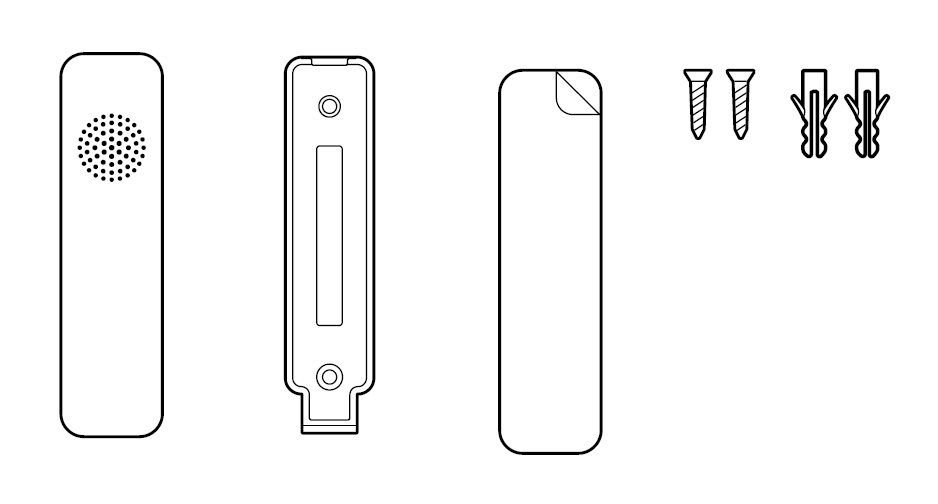
Package contents
- Sensor Unit
- Mount
- Large Adhesive Tape
- Paper guide
- 2x Screws
- 2x Wall Anchors
Button Functions.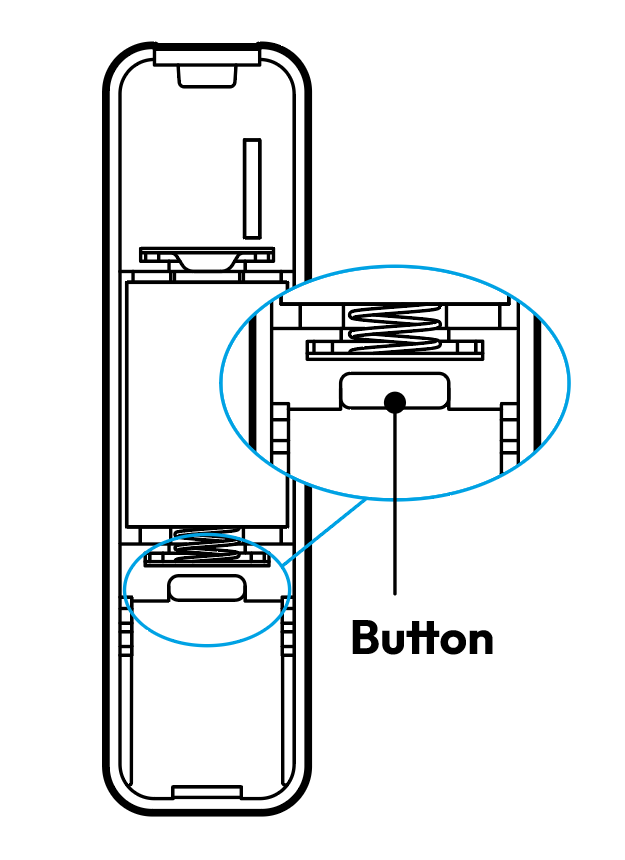
The Environment Sensor supports the following button functions.
| Push Type | Function | Description |
| Initial Power Up (Outside Network) | SmartStart Pairing | SmartStart:During this time, aerQ Sensor 8 will send inclusion requests for SmartStart Learn Mode.
|
| Initial Power Up (Inside Network) | 1. Wakeup Report 2. Reports all Sensor Data | Wakeup and Send All Sensor Reports: aerQ Sensor 8 will inspect itself for new temperature and humidity data, it then send a Wakeup Notification and then all sensor data, sensor will remain awake for 15 seconds.
|
| Short Press | 1. Quick Exit Inclusion or Exclusion mode. 2. Network Status | Exit Classic Inclusion or Exclusion: If aerQ Sensor 8 is in inclusion or exclusion mode, inclusion or exclusion would immediately stop and go into standby mode. Wakeup Report:A wakeup report will be sent to the Z-Wave Controller/hub and allow any queued commands to be sent to the aerQ Sensor 8.
|
| 2x Button Tap | Classic Inclusion or Exclusion | Classic Inclusion/Exclusion: Used to pair or unpair the aerQ Temperature and Humidity Sensor. Exclusion can be done regardless if the sensor is paired or not.
|
| Long Press/Hold between 3 to 5 seconds. | Reports all Sensor Data | Reports all Sensor Data: When action button is released between 3-5 seconds, all sensor data including battery report will be sent to the Z-Wave Controller/hub.
|
| Long Press/Hold >12 seconds | Factory Reset | Factory Reset:Initiates "Device Reset Locally" causing the sensor to be removed from the hubs software and factory reset itself.
|
Quick start.
Getting your aërQ Temperature and Humidity Sensor 8 up and running is as simple as installing it and linking it to your Z-Wave network. The following instructions tell you how to add your aërQ Sensor to your Z-Wave network using an existing gateway.
Power aërQ Temperature and Humidity Sensor 8.
aërQ Temperature and Humidity Sensor 8 has a battery tab in this unit to keep the unit from utilizing the battery when it is first purchased. Make sure that you remove this tab before you continue with the installation.
1. Slide the back cover out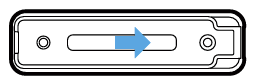
2. Lift the back cover up
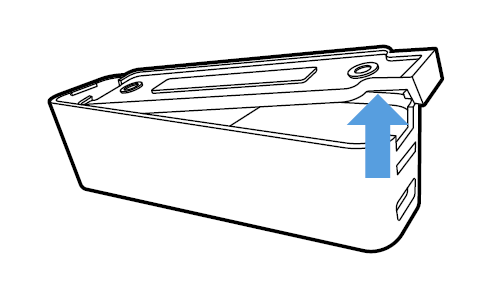
3. Pull the battery tab out which should cause the battery to connect.
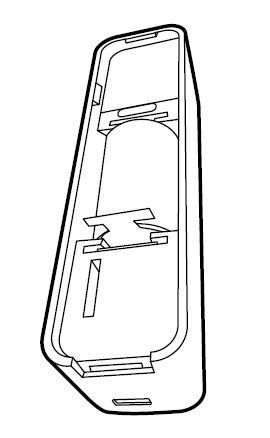
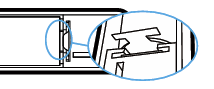
4. aërQ Temperature and Humidity Sensor 8 is now ready to be paired to any compatible Z-Wave Controller.
Using an existing gateway to pair.
This section will go over brief steps to connecting aërQ Temperature and Humidity Sensor 8, for further details on connecting this product to your hub, click on the hub that you have to access more detailed steps.
Initiate classic pair mode with aërQ Temperature and Humidity Sensor 8:
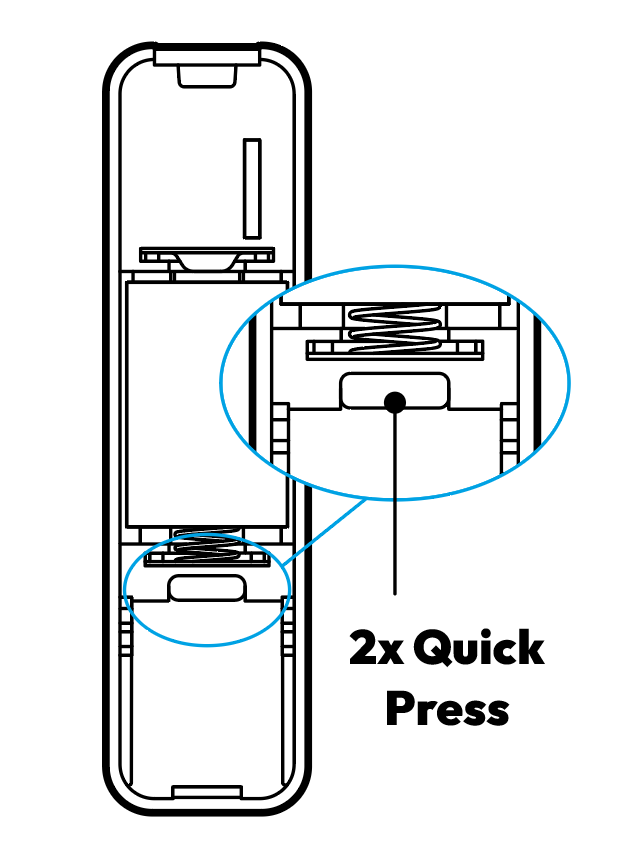 Quick Press the button twice (2x times) within 1 second while your hub is in pair mode - the green LED will flash fast when the sensor is attempting to include/pair or exclude/reset (depending on what mode your z-wave controller is in).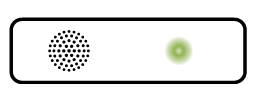
Using an existing gateway.
This section will go over brief steps to connecting aërQ Temperature and Humidity Sensor 8, for further details on connecting this product to your hub, click on the hub that you have to access more detailed steps.
- Aeotec AutoPilot:
- Open up AutoPilot UI
- Click on "DEVICES"
- Click on "+ Add new"
- Click on "+"
- Click on "+ Add"
- Now tap the Action Button 2x times within 1 second on your aërQ Temperature and Humidity Sensor.
- Aeotec Smart Home Hub / SmartThings:
- Open SmarThings app.
- Tap + (at the top right corner).
- Tap "Add device"
- Tap Scan Nearby.
- Now tap the Action Button 2x times within 1 second on your aërQ Temperature and Humidity Sensor.
- Click on "Setup" when the new device appears.
- Scan the QR code, or choose to enter the 5-digit DSK code.
- Home Assistant / Z-WaveJS:
- Open up Home Assistant
- Click on "Configuration" at the bottom left of the page.
- Click on "Integrations".
- Click on "Configure".
- Click on "ADD NODE".
- Click on "START INCLUSION"
- Now tap the Action Button 2x times within 1 second on your aërQ Temperature and Humidity Sensor.
- SmartStart QR code scanning:
- If your Z-Wave gateway supports SmartStart, you can scan the QR code on the aërQ Temperature and HumiditySensor to automatically pair the sensor if your Z-Wave hub supports this.
- You can set your hub into SmartStart pair mode, then power up the aërQ Temperature and Humidity Sensor to automatically pair the sensor
- For most other hubs:
- Set your Z-Wave hub to connect new Z-Wave devices.
- Tap the aërQ Temperature and Humidity Sensor 8 tap the Action Button 2x times within 1 second.
- If prompted, scan the QR code or enter the 5 digit DSK code.
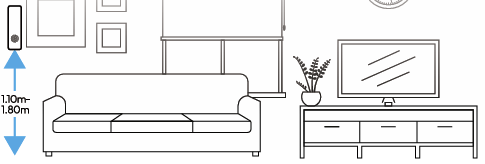
aërQ Temperature and Humidity Sensor 8 utilizes double-sided adhesive tape to allow you to aërQ Temperature and Humidity Sensor 8 onto any flat surface.
Make sure to install the sensor on a well ventilated spot.
If this sensors primary feature is to spot mold danger, install this sensor close to the spot where you suspect mold will grow as this sensor calculates dew point and warns you of potential mold dangers.
Advanced functions.
Communication with a Sleeping device (Wakeup).
This device is battery operated and utilizes a deep sleep state most of the time to save battery life. Communication with the device is limited. In order to communicate with the aërQ Sensor, a Z-Wave controller is needed in the network.
This device will wakeup regularly and report a wakeup state by sending out a Wakeup Report. The controller can then send out queued commands for the aërQ Sensor to control it before it goes back to sleep.
If the device was included by a Z-Wave controller, the controller will usually perform all necessary configurations. The wakeup interval is a trade-off between maximal battery lifetime and the desired responses of the device.
Wakeup aërQ Sensor:
- Tap the button once to wakeup aërQ Sensor for 15 seconds.
Removing your aërQ Sensor from a Z-Wave network.
aërQ Sensor can be removed from your Z-Wave network at any time. You’ll need to use an existing Z-Wave network to do this and the following instructions which will tell you how to do this using your existing Z-Wave Network.
This method can be used with any Primary Z-Wave Controller even if it is not directly paired to aërQ Sensor.
Using an existing gateway.
1. Place your gateway or controller into Z-Wave unpair or exclusion mode. (Please refer to your controller/gateway manual on how to do this)
2. Tap the button on aërQ Sensor 2x times within 1 second.
3. Your gateway should confirm if aërQ Sensor is successfully excluded from your network.
Manually Factory reset aërQ Sensor.
This device also allows being reset without any involvement of a Z-Wave controller. This procedure should only be used when the primary controller is inoperable otherwise your controller will be left with a phantom node that does not exist.
Factory Reset aerQ Sensor:
- Push the button of aërQ Sensor for 12+ seconds.
Product Usage.
This device will start monitoring all air parameters once paired to your Z-Wave network. The measurement of air happens once every 15 minutes, while tapping the Tamper Switch once will force an immediate measurement and change indication based on the danger level.
Reported sensors.
Humidity: +/- 3 % on relative humidity, +/-1 %
- Default Activity:
- Humidity is checked every 15 minutes
- When checked, if the immediate humidity is +/- 5% RH change against the previous reported value, humidity is reported.
- If humidity does not change or get reported over +/- 5% RH after 43200 seconds (or 12 hours), it will report a new humidity value regardless of change.
- Settings affecting this report
- Parameter 1 [4 byte] = 900
- Parameter 3 [1 byte] = (Decimal Value*0.1 = Humidity)
- EU/US = 50 (or +/- 5.0% RH)
- Parameter 18 [4 byte] = 43200
Hysteresis Temperature: 0 ... 65 °C +/- 1 Kelvin
- Default Activity:
- Temperature is checked every 15 minutes
- When checked, if the immediate temperature is +/- 2.0C (EU) or +/- 3.6F (US) degrees of change against the previous reported value, temperature is reported.
- If temperature does not change or get reported over +/- 2.0C (EU) or +/- 3.6F (US) degree after 43200 seconds (or 12 hours), it will report a new temperature value regardless of change.
- Settings affecting this report
- Parameter 1 [4 byte] = 900
- Parameter 2 [1 byte] = (Decimal Value*0.1 = Temperature Threshold)
- US = 36 (or +/-3.6F)
- EU = 20 (or +/-2.0C)
- Parameter 18 [4 byte] = 43200
Dew Point: 0 ... 65 °C +/- 1 Kelvin (calculated from other sensor values)
- Updates a new report any time humidity or temperature reports a new value.
Battery Report:
- Voltage Level and Battery Level
- 2.90V or greater = 100% battery level
- 2.6V or less = 0% battery level
- Default Activity:
- Sends new battery report upon wakeup or power on.
- If battery level drops under 20%, then a battery report will be sent.
- Settings affecting this report:
- Parameter 23 [1 byte] = 20
Wireless Reports and Command Class.
The measured values of Humidity and Temperature are reported to your Z-Wave gateway, below are the primary command class used to report the sensor values.
Main command classes and descriptions.
Each command class will output specific values to your Z-Wave gateway, below is a brief sliver of information that should be displayed in your controller if it is supported.
Binary Sensor V2
Reports ON / 0xFF if humidity is greater than 70%.
Reports OFF / 0x00 if humidity is less than 70%.
Multilevel Sensor V11
Air temperature
Scale = Celcius
Precision = 1
Size = 2
Humidity
Scale = Percentage
Precision = 0
Size = 2
Dew point
Scale = Celcius
Precision = 1
Size = 2
Association Groups.
Group Association is a specific function in Z-Wave that allows you to tell aërQ Sensor who it can speak to. Some devices may only have 1 group association meant for the gateway, or multiple group associations that can be used for specific events. This type of function isn't used too often, but when it is available, you may be able to use it to directly communicate to Z-Wave devices instead of controlling a scene within a gateway which can have unforeseen delays.
Some gateways have the ability to set Group Associations to devices that have these special events and functions. Typically this is used to allow your gateway to update the status of aërQ Sensor instantly.
By default, your primary gateway should have been associated with aërQ Sensor automatically during the pairing of your Siren. For any case you have a Secondary Z-Wave Controller, you'll need to associate it to your aërQ Sensor in order for your secondary controller to update its status.
| Group Number | Description | Parameter # reference | Description |
|---|---|---|---|
| 1 | Lifeline | N/A | Assigned to the Z-Wave Controller/Hub, determines where it should send its standard reports to. |
| 2 | Temperature High Trigger | 14 | Basic Set Issues an ON command when temperature detected is higher than the set value set in Parameter 14. |
| 3 | Temperature Low Trigger | 15 | Basic Set Issues an ON command when temperature detected is lower than the set value set in Parameter 15. |
| 4 | Humidity High Trigger | 16 | Basic Set Issues an ON command when humidity detected is higher than the set value set in Parameter 16. |
| 5 | Humidity Low Trigger | 17 | Basic Set Issues an ON command when humidity is detected is lower than the set value on Parameter 17. |
| 6 | Air Temperature | N/A | Multilevel Sensor Report Issues a temperature report to a Z-Wave Device that supports receiving external Z-Wave temperature reports. Useful for temperature control Z-Wave devices such as thermostats. |
| 7 | Mold Danger | N/A | Notification Report Sends Alarm messages when mold danger is present. |
There are further advanced parameter settings and group association settings not listed in this guide. You can find the attachment of the advanced engineering sheet of the aerQ Sensor 8 which will give you all possible functions of the aerQ Sensor 8 that may be missing in this guide.
Here is the configuration parameter table for the aërQ Temperature & Humidity Sensor 8 (ZWA057):
| Parameter # | Byte Size | Description | Settings / Values | Value Description |
| 0x01 (1) | 4 | Set Threshold Check Time Sets the check interval time. | 0 30 ~ 65535 | Disable Seconds (Minimum time is 30 seconds when on battery) |
| 0x02 (2) | 1 | Minimum Temperature Change to Report Triggers a temperature report based on change. | 0 1 ~ 255 | Disable 0.1 ~ 25.5 degree |
| 0x03 (3) | 1 | Minimum Humidity Change to Report Triggers a humidity report based on change. | 0 1 ~ 255 | Disable 0.1 ~ 25.5 % |
| 0x04 (4) | 1 | Visual LED Indications (Bit field) Defines when the green or red LED indicates events. | 0 ~ 7 | 0: Disable all indications. Bit 0: Periodic Reports (Green LED) Bit 1: Wake up interval report (Green LED) Bit 2: Mold danger alarm (Red LED) |
| 0x0C (12) | 1 | Sensor Limit Enable (Bit field) Enables limits for Temperature and Humidity. | 0 ~ 15 (0x00 ~ 0x0F) | 0: Disable Bit 0: Temperature upper limit Bit 1: Humidity upper limit Bit 2: Temperature lower limit Bit 3: Humidity lower limit |
| 0x0D (13) | 1 | Offset Value for Mold Danger Alarm Adjusts the humidity threshold for mold danger. | 0 ~ 40 | Offset value Default Value = 60% + Value |
| 0x0E (14) | 2 | Temperature Upper Watermark Sends BASIC Set to Group 2 if exceeded. | 1 ~ 1000 | 0.1 ~ 100.0 degree |
| 0x0F (15) | 2 | Temperature Lower Watermark Sends BASIC Set to Group 3 if below. | -200 ~ 1000 | -20.0 ~ +100.0 degree |
| 0x10 (16) | 2 | Humidity Upper Watermark Sends BASIC Set to Group 4 if exceeded. | 0 ~ 1000 | 0 ~ 100.0 % |
| 0x11 (17) | 2 | Humidity Lower Watermark Sends BASIC Set to Group 5 if below. | 0 ~ 1000 | 0 ~ 100.0 % |
| 0x12 (18) | 1 | High Temp Trigger BASIC Set Value sent to Group 2 when triggered. | 0 ~ 255 | Basic Set Value |
| 0x13 (19) | 1 | Low Temp Trigger BASIC Set Value sent to Group 3 when triggered. | 0 ~ 255 | Basic Set Value |
| 0x14 (20) | 1 | High Humidity Trigger BASIC Set Value sent to Group 4 when triggered. | 0 ~ 255 | Basic Set Value |
| 0x15 (21) | 1 | Low Humidity Trigger BASIC Set Value sent to Group 5 when triggered. | 0 ~ 255 | Basic Set Value |
| 0x16 (22) | 1 | Enable Binary Sensor Report Backwards compatibility for mold danger state. | 0 1 | Disable Enable |
| 0x17 (23) | 1 | Low Battery Threshold Level to report low battery. | 10 ~ 50 | 10 ~ 50 % |
| 0x18 (24) | 4 | Periodic Reports Report period for battery, temp, and humidity. | 0 30 ~ 65535 | Disable Seconds |
| 0x19 (25) | 2 | Temperature Offset Calibrates temperature sensor value. | -200 ~ 200 | -20.0 ~ 20.0 degrees |
| 0x1A (26) | 2 | Humidity Offset Calibrates humidity sensor value. | -200 ~ 200 | -20.0 ~ 20.0 % |
| 0x40 (64) | 1 | Temperature Scale Sets scale for auto reports and settings. | 0 1 | Celsius Fahrenheit |
Was this article helpful?
That’s Great!
Thank you for your feedback
Sorry! We couldn't be helpful
Thank you for your feedback
Feedback sent
We appreciate your effort and will try to fix the article